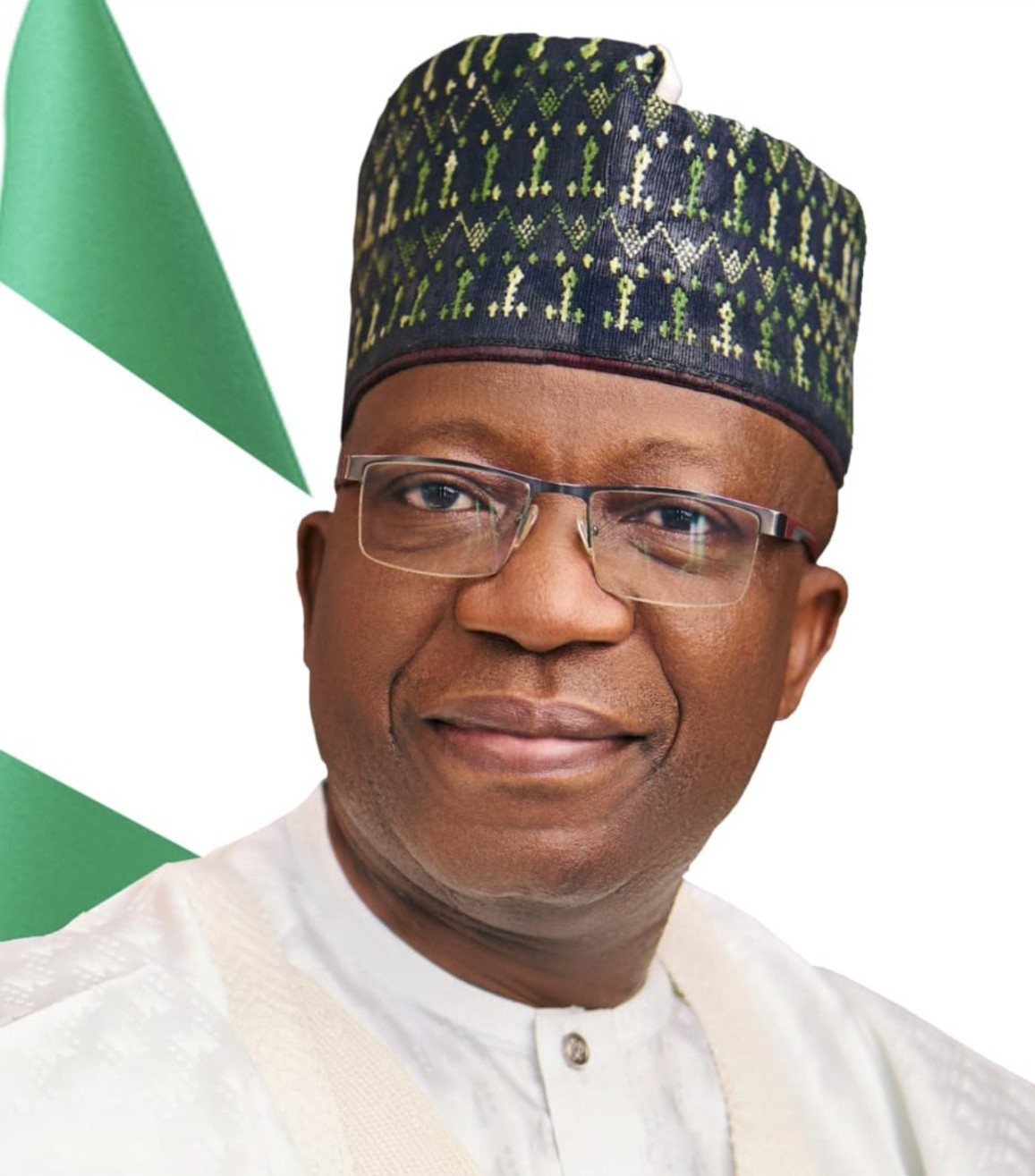
Office of the Director-General
The office of the Chief Executive and Academic Officer of the Institute, and the eight divisions and units that report to it.
The Director-General
The Chief Executive and Academic Officer of the Institute, charged with general responsibility for its day-to-day management and operations.
The Director-General is directly appointed by the President of the Senate in consultation with the Speaker of the House of Representatives. In accordance with the NILDS Act, the incumbent holds office for a period of four years in the first instance, and may be re-appointed for a further period of four years and no more, on such terms as the Act prescribes.
The Director-General is responsible to the Governing Council, and is also Chairman of the Institute’s Management Committee. Eight divisions and units sit directly within the office, covering legal advice, liaison with the National Assembly, general services, communications, planning, ICT, procurement, and gender and inclusivity.
Divisions & units in the office
Legal Division
Headed by a Director, Legal / Legal Adviser, the Division provides legal advice to the Institute and to the Director-General.
Liaison Unit
With its office situated in the National Assembly Complex, the Unit is staffed by the Institute through the posting of relevant personnel, and is headed by an Assistant Director or equivalent.
General Services Division
The Head of General Services assists with the administrative functions of the DG’s Office, and serves as secretariat for the Academic Advisory Committee and similar committees established by the Director-General.
Information, Communications & Protocol
The Division handles public relations, publicity and protocol for the Institute, advises management on all aspects of information and publicity, organises media coverage of programmes, and facilitates visa and travel arrangements for management, staff and stakeholders.
Planning, Monitoring & Evaluation
The Division monitors and evaluates all programmes and activities, tracking output, outcome and impact against the Annual Work Plan and the Strategic Plan, and is custodian of the data that informs management decisions.
Information & Communications Technology
The Unit is responsible for the organisation, management and implementation of ICT tools and services across the Institute — providing the infrastructure for automation and the governance for its use.
Procurement & Stores Division
Responsible for the procurement activities of the Institute in compliance with the Procurement Act. The Institute’s Store is a unit under this Division.
Gender & Inclusivity Unit (GIU)
A key outcome from the conference was for NILDS to take a more strategic role in advancing gender inclusion across Nigeria. Thus, in December, 2023, the DG created the Gender and Inclusivity Unit under the Office of the Director General to coordinate and interface with relevant domestic and international partners on research, programmes, and advocacy focusing on gender, youth and Persons living with Disabilities (PWDs) inclusion.
Gender & Inclusivity Unit (GIU)
The National Institute for Legislative and Democratic Studies (NILDS) strengthens Nigeria’s democracy by advancing gender equality, empowering women, and supporting the Sustainable Development Goals (SDGs). To foster inclusive policymaking and political participation, NILDS hosted an International Conference on Women in Governance in August 2023.
Since the creation of the Unit, NILDS have through collaborative partnerships with key organisations like the United Nations Women (UN Women), Westminster Foundation for Democracy (WFD), MacArthur Foundation, Plan International, Women in Politics Forum, the UK-funded Strengthening Peace and Resilience in Nigeria (SPRiNG) Programme, Policy and Innovation Centre (PIC), etc. engaged with the National and State Houses of Assemblies in developing the Gender, Equity and Inclusion Bill, organised trainings on advancing women in political participation and representation in governance, and supported advocacy on advancing gender inclusion policies and legislations in Nigeria.
Over the past few years, the GIU has expanded its reach through strategic partnerships with development partners, universities, government bodies, civil society, and international democratic institutions. These collaborations intentionally pave the way for youth development and their transition into leadership roles in Nigeria. The GIU aspires to serve as a vital hub, bridging the gap between young people and the National and State Houses of Assembly to continue to foster inclusive, and impactful policy dialogues for meaningful youth representation. Additionally, the Unit is partnering with youth-focused NGOs to leverage technology for broader civic participation and inclusive governance.
The GIU is positioning itself as a global nexus, leveraging empirical research to elevate youth political involvement from tokenism to institutional governance. As a premier hub for cross-sector collaboration, the Unit will serve as a powerful catalyst for inclusive and sustainable development across Nigeria, Africa, and the global community.
To promote inclusion, the GIU is collaborating with organizations for persons with disabilities, in developing a monitoring system that tracks compliance of Nigerian disability policies across public and private sectors.
Correspondence for the Director-General
Formal correspondence should be addressed to the Office of the Director-General at the Permanent Site, Piwoyi. General enquiries are handled through the Institute’s contact form and directed to the appropriate department.