Skip to content
Federal Republic of Nigeria · National Assembly
Home The Institute About
The Institute

About the Institute

A capacity-building agency of the National Assembly, providing technical services to the legislature and to the other institutions of democracy in Nigeria.

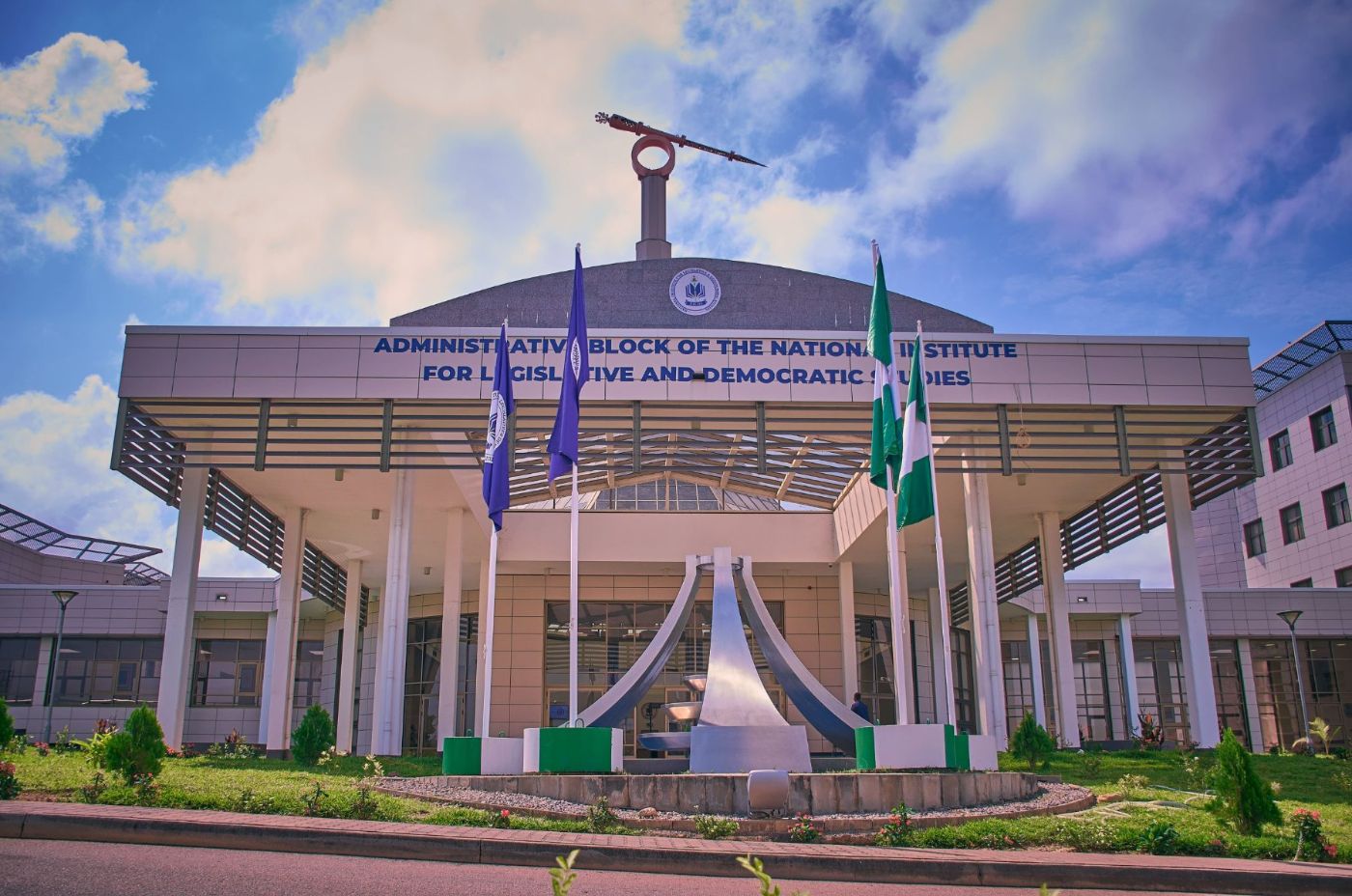
Administrative Block of the National Institute for Legislative and Democratic Studies, Permanent Site, Piwoyi, Abuja
Permanent Site, Piwoyi
Origins & mandate

From a research project to a national institute

The Institute evolved from the Policy Analysis and Research Project, and now carries a statutory mandate for the legislature and for democratic institutions across Nigeria.

The National Institute for Legislative and Democratic Studies is a capacity-building agency of the National Assembly, and also provides technical services to the legislature and other institutions of democracy in Nigeria. It was established by the Legislative Studies Act 2011 of 2 March 2011.

The Institute evolved from the Policy Analysis and Research Project (PARP), established in 2003 with the financial support of the African Capacity Building Foundation. For over seven years PARP strengthened the capacities of legislators and legislative staff through research and analytical support to the National Assembly.

On 26 January 2018, President Muhammadu Buhari signed the NILS (Amendment) Act, 2017. It renamed the Institute the National Institute for Legislative and Democratic Studies and expanded its mandate to include the provision of capacity development services to other democratic institutions in Nigeria.

2003
PARP established with ACBF support
2011
Legislative Studies Act, 2 March
2018
Amendment Act broadens the mandate
Purpose

Vision & mission

Vision

To be the regional hub and top-tier research and training institution that promotes and supports the development of dynamic, effective and accountable legislatures and democratic institutions.

Mission

To support and strengthen the legislature and other democratic institutions and actors in Nigeria and beyond, to make informed decisions and effectively discharge their statutory responsibilities — through focused research, training, the sharing of best practices, and the provision of professional support services.

Statutory objectives

What the Act requires of the Institute

Core areas of work ›
01

To act as a world-class multi-disciplinary institution providing training, capacity building, research, policy analysis and extension services for the legislature at Federal, State and Local government levels.

02

To meet a long-felt need to provide legislators and officials with institutionalised opportunities for problem-oriented study and systematic training in legislative institutions, processes and procedures.

03

To improve the capacity of legislators to sustain and consolidate democratic governance through deliberation and policy formulation.

04

To improve the technical capacity of legislative staff, committee secretaries and political aides to process appropriation bills and conduct policy oversight of the executive.

05

To stock and improve the quality of relevant information for members of the national and state assemblies and the general public, through the dissemination of research output and consultative fora.

06

To monitor and evaluate the implementation of annual budgets, and report to the relevant assemblies.

07

To conduct short-term training modules for members of the national and state assemblies and their staff.

08

To promote and disseminate among legislative assemblies in Nigeria the practice of science-based methodologies of law-making.

09

To design, analyse and evaluate development policies in Nigeria — particularly macro-economic, socio-political and cultural questions.

10

To support networking arrangements involving parliaments and policy analysis units across the sub-region, in order to share experience.

11

To prepare such reports and information as may be required by special and standing committees in the course of their work.

12

To establish and consolidate a database on relevant development policy issues, for use in deliberations on bills and in the drafting of legislation.

13

To promote best practice in legislative activity in Nigeria and in countries of the sub-region.

14

To strengthen democratic processes, structures and institutions, and to promote and protect constitutional due process in legislative practice.

15

To assist the National Assembly and the State Assemblies in their efforts to conceive and draft bills.

Scholarly oversight

Committees & editorial board

Academic Advisory Committee
Name
Institution
Role
Prof. Attahiru Jega
Fmr. Vice-Chancellor, Bayero University, Kano
Chairman
Prof. Badayi Sani
Bayero University, Kano
Member
Prof. Jamila M. Nasir
University of Jos
Member
Prof. Adigun Agbaje
University of Ibadan
Member
Prof. Muhammad Tabiu, SAN
Bayero University, Kano
Member
Prof. Peter C. Egbon
Delta State University
Member
Prof. Yusuf Zoaka
University of Abuja
Member
Editorial Board
Name
Position
Board role
Prof. Abubakar O. Sulaiman
Director-General, NILDS
Editor-in-Chief
Dr Adeyemi Fajingbesi
Director, Special Duties
Member
Prof. Mike Obadan
Economics and Statistics, University of Benin
Member
Dr Jake D. Dan-Azumi
Special Adviser (Technical) to the DG
Production Manager
Dr Nasir N. Abdulsalam
Special Adviser (Academic) to the DG
Secretary
Dr Samuel Oguche
Research Fellow, NILDS
Assistant Secretary